Even before the earliest vedas were compiled over 3,500 year ago ancient Indians Were studying the heavens. Passing knowledge down orally. They studied the movement of celestial bodies to understand the rhythms of life on earth. A 1000 year old building serves as proof of their understanding of the universe.
Dawn of the Spring equinox. The Earth leans neither towards nor away from the Sun. Day and night of equal duration. In the village of Modhera in Gujarat anincredible chain of events begins. The first rays of light align exactly with the entrance mandapa of the Sun temple. The light passes through the mendapa and into the second chamber the Garbhagriha or the sanctum sanctorum. A 1000 years age a beam of light from the rising sun would have fallen exactly on the idol of Suryadev the temple resident deity.
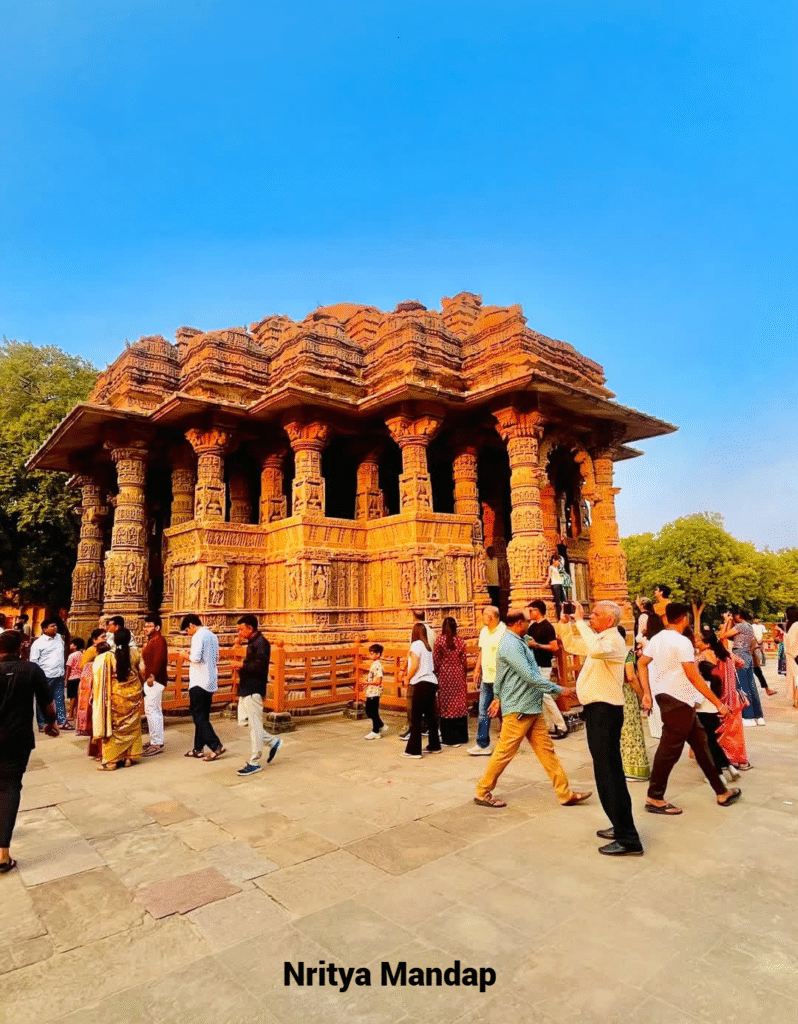
Modhera is very intriguing because it’s not just that it’s a temple devoted to the sun god. It’s actually almost like a celebration of early Indian knowledge of astrology. The Sun was word hipped in India for millennia as the dispeller of darkness and the source of life. Modhera’s temple design pays tribute to the Lord of Light. Ancient architecture was based on Vedic principles to please the Gods and ensure good fortune for the residents.
Vastu Shastra:-
Vastu Shastra and later texts guided temple design. In these taxis geometry, geography astronomy and astrology played a vital role.
Garbha Griha:-
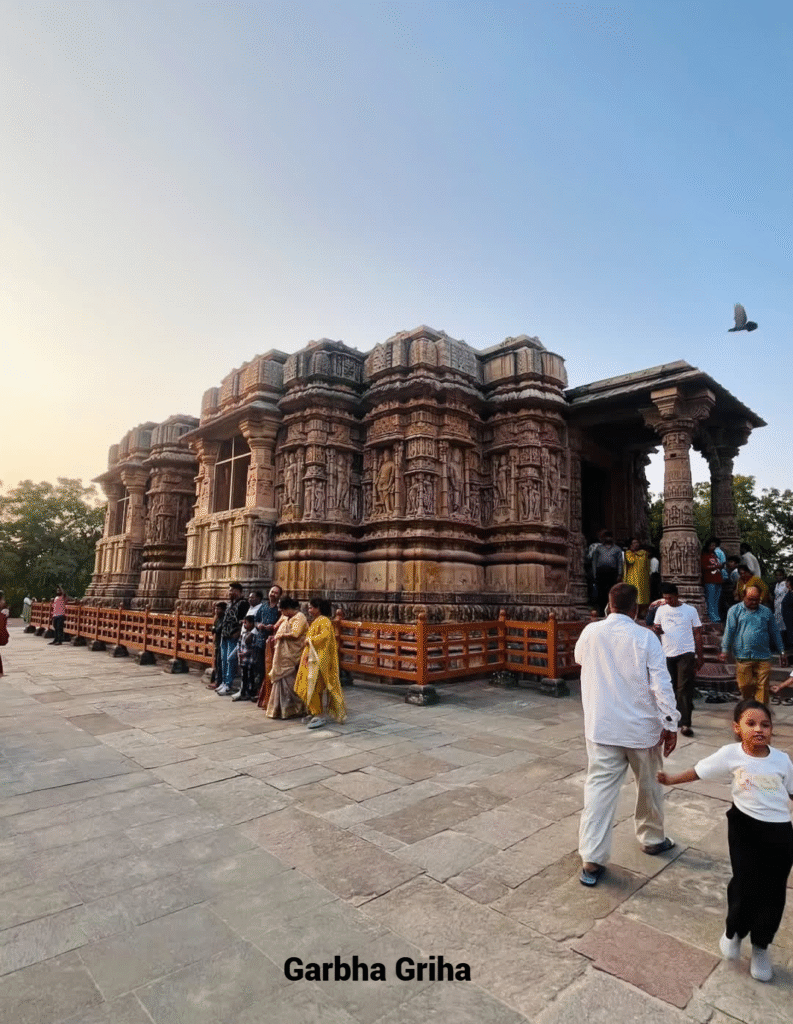
The most important specially of this Garbha Griha is that designed to complement all the 10 directions All around the temple, 1008 that is 108 that is in multiples of 9, elephants have been created Dharma, Artha, Kama and Moksha, these four aspects. For depicting all four facets of life through idols, through motif, and through sculpture, this is a beautiful attempt.
William Dalrymple:-
Indian astronomy was always astrology linked to Indian astrology. In ancient India astrology was regared as a science related to astronomy which states could use with great effect not just weddings but all the events of state would be determind by your understanding of the stars. Across the ancient world ideas on Mathematics, Astronomy and Astrology were exchanged and developed. Some of the most significant concepts were to emerge in India. About 100KM from Ahmedabad Modhera is almos exactly on the Tropic of Caner. The location was obviously chosen for catching the direct rays of sunlight on specific days of the year. Here, on the banks of the Pashupati river King Bhima Deva Solanki built the Temple to Surya presumably in 1072. His clan called themselves Suryavnshi the descendanks of Surya. Today the Sun Temple is listed by the United Nations as a world heritage site.
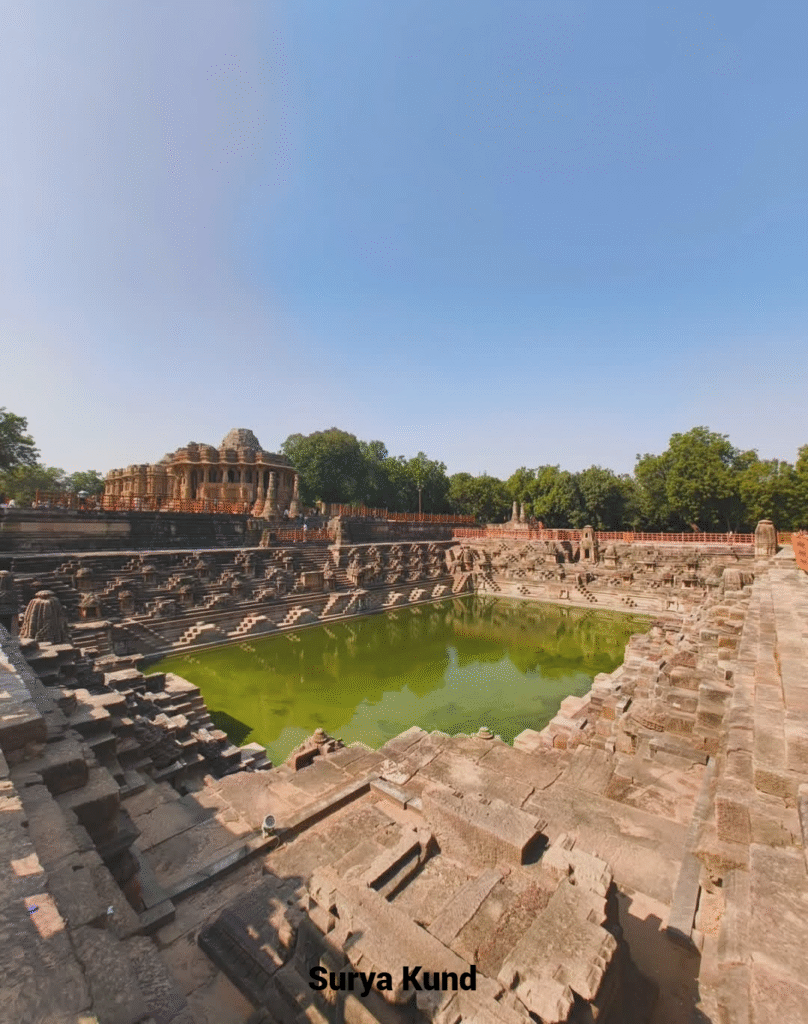
The temple is built of sandstone brought from over 100KM away. The soft stone allowed sculptors to achieve great detail in the dazzling array of carvings that adorn every surface deities scenes from Hindu mythology image of life in those times and art. Facing East, the complex is divided into three parts all perfectly aligned. At the eastern end is the Surya Kund, a step well. Then the Sabhamandap an assembly, or dance hall. Finally, the Garbhagriha sacred inner chamber that houses the idol of Surya Dev. It is likely that the construction of the Sun temple was influenced on astrology written centuries before the temple was built. In particular the Surya Siddhant Believed by some to have written by the great mathematician astronomer and poet. Aryabhata 1500 year ago. According to it the earth takes 365 days 6 hours and 12 minutes to go around the sun. That remarkably close to modem day calculation made with all the tech available today. Scholars believe that units of time found their way into temple architecture. The Sun Temple’s Sabhamandap has 52 pillars representing 52 weeks in a year. 12 statues of Surya for the 12 months of a years. Surya’s chariot is driven by seven horses perhaps representing the days in a week. And the Garbhagriha’s 24 pillars stand for the hours in a day.
The Surya Kund contains 108 small shrines According to scholars 108 is a significant number in Vedic cosmology with its own share of mystery.
And it is our misfortune that cruel, ruthless, fanatic, and illiterate invader such as Alauddin Khalji Destroyed this beautiful and incredible example, without realizing its importance and according to Hindu traditions, people do not perform Pooja in the ruins of a temple. Alauddin Khalji may have destroyed this temple with cruelty and brutality. But the Government of Gujarat is constantly developing this temple So many tourist visit this place It is a protected mount declared by the. Archeological Survey of India. Around 14th and 15th January each year, Uttarardh Festival. At the time of Makar Sankranti, a very beautiful cultural festival is celebrated here.
Tckets/Entry Fee:-
Indian Visitors RS 25, Foregners RS 300. For entry for children below 15 years Archaeological Survey of India.